

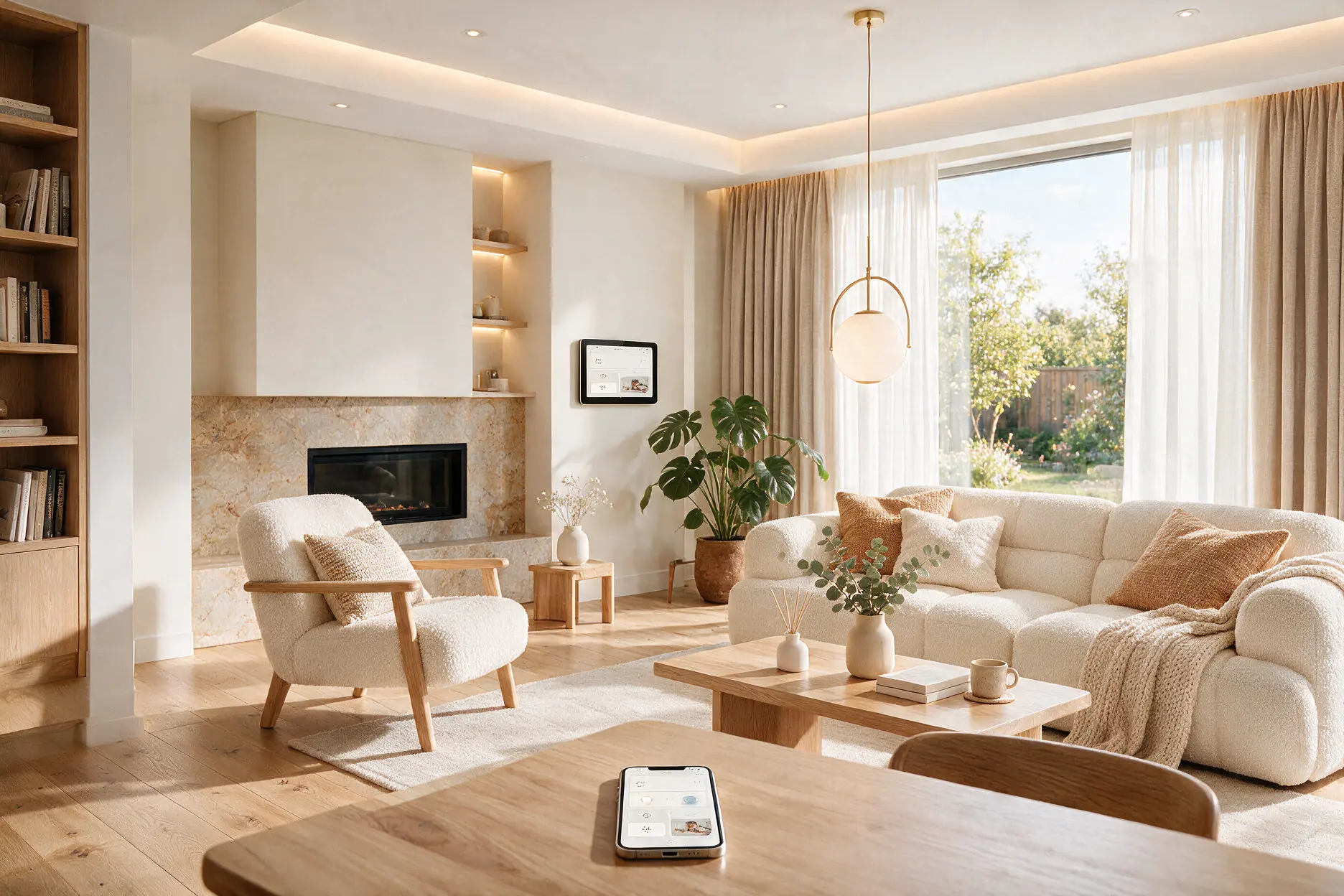
Moving into a new home is the perfect time to make it smart — the walls may be open, the wiring accessible, and the space a blank canvas. The best smart home ideas for new homeowners deliver everyday value from day one: smart lighting and scenes, smart switches, motorised curtains, a video door phone, smart locks, security cameras, a smart thermostat or climate control, voice control, and one app to run it all. The golden rule is to plan early — even if you install in phases — so the infrastructure is ready. Start with high-impact basics like lighting and security, then build up. This guide covers ten smart home ideas worth prioritising in a new home.
A new home is a rare opportunity — the one time when adding smart features is easiest, cleanest, and most cost-effective. Here are ten ideas to make your new home genuinely smart from the start.
Who Is This Guide For?
New homeowners who've just bought, built, or are moving into a home, villa, or apartment in Noida, Greater Noida, Gurgaon, or Delhi NCR. Anyone renovating and wanting to add smart features. And those unsure where to begin with a smart home and what to prioritise first.
First — Why "New Home" Is the Best Time
Adding smart home features is dramatically easier before you move in and settle. Walls may be open, wiring is accessible, and you can plan everything into the home's design. Retrofitting later is possible, but planning early means cleaner installation, better integration, and lower cost.
Even if you install in phases (budget-wise), it's worth planning the infrastructure now — wiring, conduits, and provisions — so future additions are simple. This is the single biggest advantage new homeowners have. With that in mind, here are the ideas.
1. Smart Lighting & Scenes
The highest-impact starting point. Smart lighting lets you control lights by app, voice, or schedule, dim them, and set scenes — a "movie" scene, a "goodnight" scene, a warm evening glow — all at a tap. It transforms daily living and is often the first thing new homeowners fall in love with. Plan it early so the layered lighting design and wiring are right from the start.
2. Smart Switches
Rather than only smart bulbs, smart switches control whole circuits elegantly, replacing ordinary switches with sleek panels that work by touch, app, and voice — and integrate scenes. They're the backbone of a clean, controllable smart home and best installed during setup.
3. Motorised Curtains
Motorised curtains that open and close by remote, app, schedule, or scene are one of the most-loved upgrades — because you use them every single day. Wake to curtains opening gently, or close them all with a "goodnight" command. Best wired in during setup, though retrofit options exist.
4. Video Door Phone
See and speak to whoever's at the door — from a panel or your phone, even when you're out. A video door phone is a practical, everyday security upgrade that's especially valuable for a new home, and simple to plan in from the start.
5. Smart Door Lock
Keyless entry by fingerprint, PIN, card, or app — no more lost keys, plus the ability to grant temporary access and see who came and went. A smart lock on the main door is a satisfying, high-value first upgrade for new homeowners.
6. Security Cameras (CCTV)
Peace of mind for a new home. Well-placed CCTV covering entrances and vulnerable points, viewable from your phone, is a priority worth planning early — placement matters, so design it before finishes go in.
7. Smart Climate Control
A smart thermostat or climate control adjusts cooling and heating automatically, by schedule and occupancy — comfort when you're home, savings when you're not. In India's climate, this is both a comfort and an energy-efficiency win over the life of the home.
8. Voice Control
Tie your smart home to voice assistants (Alexa, Google Home) so you can control lights, curtains, climate, and scenes hands-free. It's an easy layer to add once the smart systems are in, and it makes the home feel genuinely effortless.
9. One App / Unified Control
The difference between a pile of gadgets and a real smart home is unified control — one app or panel running lighting, curtains, climate, security, and AV together, with scenes that coordinate them. Planning for an integrated system (rather than separate apps) is what makes automation seamless. This is where an integrated approach matters most.
10. Plan the Infrastructure (Even If You Phase It)
The smartest idea of all: even if budget means installing in phases, plan the wiring and provisions now. Lay conduits, plan circuits, and design for the smart home you'll eventually want. Adding features later is then clean and simple, rather than disruptive and costly. This foresight is a new homeowner's greatest advantage.
Where to Start — Prioritising
If you can't do everything at once, prioritise by impact and by what's hardest to add later:
Do first (hard to retrofit, high impact): Smart lighting and switches, motorised curtains, CCTV placement, and above all the wiring/infrastructure planning — these are far easier during setup.
Add anytime (easier later): Voice control, some smart locks, and app additions can come later without disruption.
The principle: get the built-in elements right during setup, and layer the add-on elements whenever you're ready.
Expert Recommendation from Brightmatic
For new homeowners across Delhi NCR, our advice is consistent: plan for the smart home you'll want in five years, even if you build it in stages today. The one thing you can't easily undo is the infrastructure — so get the wiring, circuits, and provisions right at the start, and everything else can follow at your own pace.
The insight worth passing on: new homeowners often either over-buy (installing every gadget at once, some rarely used) or under-plan (adding a few smart bulbs, then finding they can't expand cleanly later). The sweet spot is in between — plan comprehensively, install by priority. Start with the high-impact, hard-to-retrofit basics (lighting, switches, curtains, security, and the wiring behind them), and add the rest as you settle in. That way your new home is genuinely smart from day one, and effortlessly expandable for years. A smart home isn't a shopping list — it's a foundation you build on.
That's the thinking behind our home automation approach — smart homes designed to grow with you, Crafting Brighter Lives.
Planning Your New Home?
A new home is the best chance you'll ever have to make it smart — cleanly, affordably, and from the ground up. Start with the high-impact basics, plan the infrastructure for the rest, and you'll have a home that's genuinely smart today and ready to grow.
Moving into a new home? Get a free consultation.
Building or moving into a home in Noida or Delhi NCR? Contact Brightmatic for a personalised smart home consultation.
FAQ's
What are the best smart home features for a new home?
The highest-impact features to start with are smart lighting and scenes, smart switches, motorised curtains, a video door phone, a smart lock, and security cameras, plus a smart thermostat and unified app control. Above all, plan the wiring and infrastructure early. These deliver everyday value and are far easier to install during a new home's setup than to retrofit later.Where should a new homeowner start with a smart home?
Start with high-impact features that are hard to add later — smart lighting, smart switches, motorised curtains, and CCTV placement — and, most importantly, plan the wiring and infrastructure for everything you might want. Easier add-ons like voice control and some smart locks can come later. Getting the built-in elements right during setup is the priority.Is it cheaper to make a home smart during construction?
Yes, generally. Planning and installing smart features during construction or before moving in is cleaner and more cost-effective than retrofitting, because walls and wiring are accessible. Even if you install in phases for budget reasons, planning the infrastructure early means future additions are simple and inexpensive rather than disruptive and costly.Do I need to install everything at once?
No. You can install in phases based on budget and priority. The key is to plan comprehensively upfront — laying the wiring and provisions for the full smart home you may eventually want — then install high-priority, hard-to-retrofit features first (lighting, switches, curtains, security) and add the rest over time without disruption.What is the most useful smart home upgrade to begin with?
Smart lighting is often the best starting point — it's high-impact, used constantly, and transforms daily living with scenes, dimming, and app or voice control. Motorised curtains and a smart lock are close behind for everyday satisfaction. Alongside these, planning the infrastructure is essential so the home can grow. Start with what you'll use every day.
Comments
No Comments