

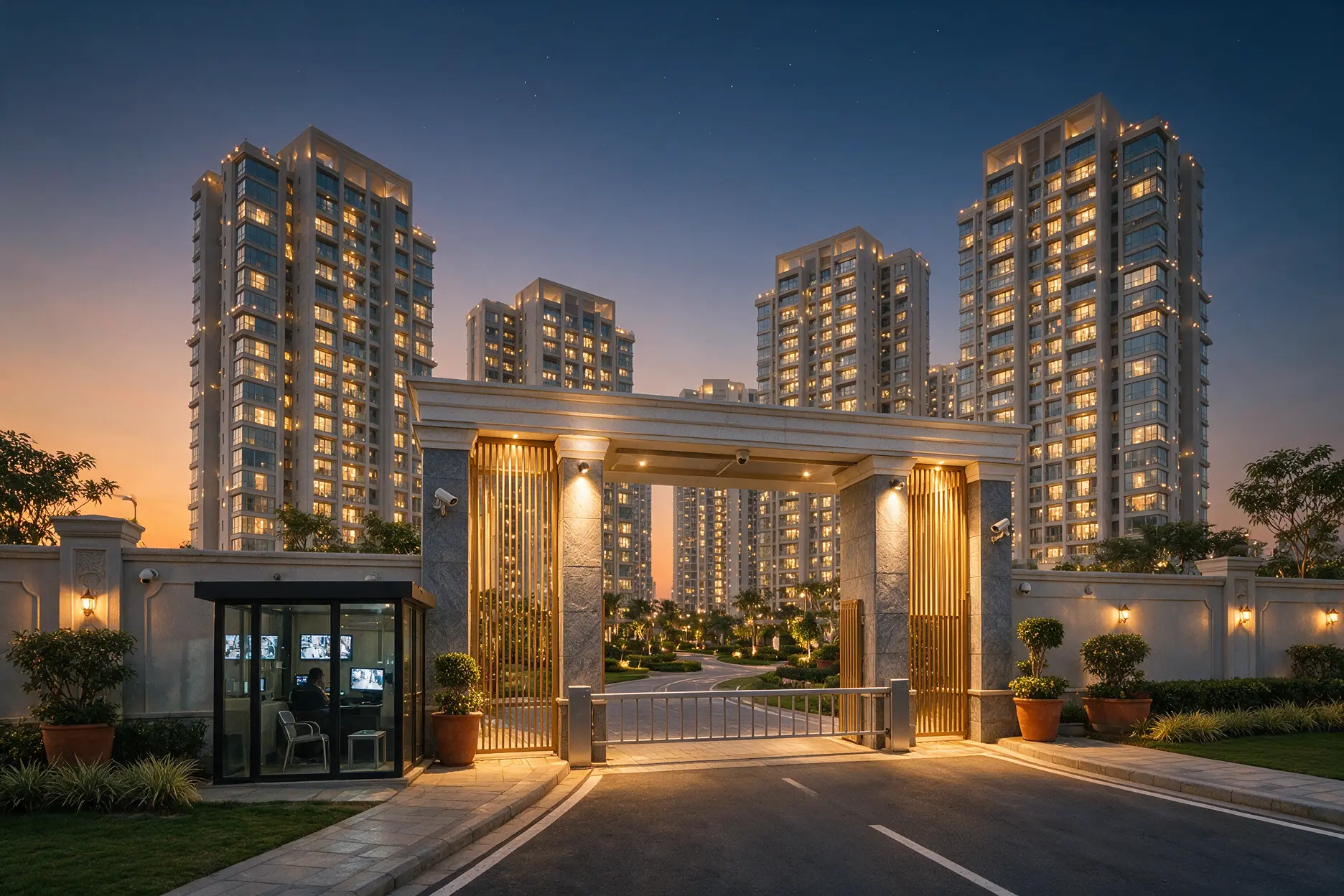
A housing society needs a CCTV system, not just a set of cameras. Done well, it covers every entry and exit, the boundary wall, parking, lifts, lobbies, and common areas without blind spots. It records reliably with enough storage, keeps working through power cuts, and is watched from a control room by trained guards. The best systems add number-plate recognition at gates, link with visitor management and access control, and give the committee clear rules for who can view and share footage. Planned properly, CCTV deters crime, settles disputes in minutes, and gives residents peace of mind. Planned badly, it becomes rows of cameras nobody watches and footage nobody can find when it matters.
Most societies install CCTV after something goes wrong: a two-wheeler stolen from the basement, a break-in, a dispute nobody can settle. The cameras go up quickly, and a year later half of them are offline. This guide shows RWAs how to plan a system that actually works.
Who Is This Guide For?
RWA and society management committees planning new CCTV or replacing an old system. Builders and developers handing over gated projects. Facility managers running large townships. And residents who want to push their society towards better security in Noida, Delhi NCR, and across India.
Why Societies Need More Than "a Few Cameras"
A home CCTV setup might be four to eight cameras. A society can need 30, 100, or more, spread across towers, basements, gates, and open grounds. At that scale, three things matter more than the camera brand:
Coverage planning. Where every camera goes, so no route in or out is left unseen.
Monitoring. Someone actually watching, with a clear process for what to do when they see something.
Reliability. Cameras, recorders, and power that keep working day after day, with a maintenance contract that fixes faults fast.
Get these right, and modest cameras perform well. Get them wrong, and expensive cameras achieve very little.
Where Cameras Should Go in a Society
Main and service gates. Every person and vehicle entering and leaving. Use a wide view plus a close, clear camera at face and number-plate height.
Boundary wall and perimeter. The most common blind spot. Intruders rarely walk through the main gate. Cover the full boundary, with special attention to corners and dark stretches.
Basement and surface parking. Vehicle theft, damage, and disputes start here. Cover ramps, driveways, and every parking row.
Tower entrances and lobbies. Who enters each block, and when.
Lifts. Valuable for resident safety and settling incidents. Use compact lift cameras.
Common areas. Clubhouse, gym entrance, children's play area, garden paths, and pool surroundings.
Service and delivery areas. Delivery drop zones, garbage areas, and staff entries.
Cameras should cover common areas only. Never point them into flats, balconies, or windows, and place clear CCTV signage at entrances.
Features Worth Paying For
IP cameras with an NVR. Sharper images, easier expansion, and central management across towers. See our guide on how a CCTV system works.
ANPR at gates. Automatic number-plate recognition reads and logs every vehicle, flags unknown vehicles, and can be linked to boom barriers for residents.
Good night performance. Many incidents happen after dark. Choose cameras that capture clear colour or infrared footage at night.
PTZ cameras for open grounds. Pan-tilt-zoom cameras let guards follow movement across large lawns or parking areas.
Enough storage. Agree a retention period with the committee (30 days is common) and size the recorders for it, so footage isn't overwritten before anyone asks for it.
Power backup. A UPS for cameras, network, and recorders, so the system survives power cuts. Without it, an outage creates the perfect blind spot.
Integration. Link CCTV with access control, visitor management, and alarms so the gate, the camera, and the entry log tell the same story.
The Control Room
A society system is only as good as the people watching it.
- A dedicated room or desk at the main gate or security office.
- Screens arranged by zone (gates, perimeter, parking, towers).
- Guards trained to spot unusual activity and follow a written response process.
- Restricted login access, with every footage request recorded.
- Optional remote access for the RWA security head.
Even a small society benefits from a basic monitoring desk. Cameras that are never watched only help after the damage is done.
Privacy and Footage Rules
Residents will rightly ask who can see footage. Set clear rules from day one:
- Cameras only in common areas, with visible signage.
- A named list of people allowed to view and export footage.
- A written process for residents to request footage (with a reason and approval).
- Secure storage and automatic deletion after the agreed retention period.
Follow applicable privacy law, including India's Digital Personal Data Protection Act, and take legal advice for your society's specific policy.
What Does Society CCTV Cost?
Indicative estimates only, not actual quotes. Final cost depends on the number of towers, cameras, storage, control room, and integration.
| Society Size | Typical Scope | Indicative Range |
|---|---|---|
| Small (up to ~100 flats) | 16–32 cameras, NVR, basic control desk | ₹2,00,000 – ₹5,00,000 |
| Mid-size (100–300 flats) | 32–80 cameras, ANPR at main gate, control room | ₹5,00,000 – ₹12,00,000 |
| Large township | 80+ cameras, PTZ, ANPR, integrated access control | ₹12,00,000+ |
Ask for an annual maintenance contract (AMC) in the quote. Most society systems fail through neglect, not poor hardware.
Common Mistakes RWAs Make
Choosing the lowest quote. Cheap cameras and no AMC usually mean a half-working system within a year.
Ignoring the boundary wall. The main gate is covered; the perimeter, where intruders actually enter, isn't.
Too little storage. Footage gets overwritten before a complaint is even raised.
No power backup. The system goes dark during power cuts.
No one watching. Cameras record, but nobody monitors or acts.
No footage policy. Leads to resident disputes and privacy complaints.
Expert Recommendation from Brightmatic
When we work with societies across Delhi NCR, we start with a site walk, not a camera count. We trace every way a person or vehicle can get in, every dark corner, and every place an incident has happened before. The camera plan is built from that map.
The insight worth passing on: societies rarely suffer because they had too few cameras. They suffer because of the one blind spot at the back wall, the recorder that silently failed, or the footage nobody could find. A well-planned system with clear coverage, reliable recording, backup power, a monitoring desk, and an AMC protects residents far better than a larger system that nobody looks after.
That's how we approach every security and CCTV project. Crafting Brighter Lives, and safer communities.
For individual homes, see our CCTV installation guide.
Planning CCTV for Your Society?
A society's security depends on coverage, monitoring, and maintenance working together. Plan the system around how people and vehicles really move through your community, and the cameras will do their job when it counts.
Get a free site survey and CCTV plan for your society.
Serving Noida, Delhi NCR & across India. Contact Brightmatic to discuss CCTV and security for your housing society.
FAQ's
How many CCTV cameras does a housing society need?
It depends on the number of towers, gates, parking levels, and the length of the boundary wall. A small society of up to about 100 flats often needs 16–32 cameras, a mid-size society 32–80, and large townships more. The right number comes from a site survey that maps every entry point and blind spot.Where should CCTV cameras be installed in a society?
Cameras should cover the main and service gates, the full boundary wall, basement and surface parking, tower entrances and lobbies, lifts, the clubhouse and play areas, and delivery and service zones. They should cover common areas only, never point into flats, and be supported by visible CCTV signage.How long should a society store CCTV footage?
The retention period is decided by the society committee, and 30 days is common. The recorders must be sized to hold that amount of footage from every camera, so recordings aren't overwritten before a resident or the police ask for them.What does CCTV installation cost for a housing society?
As an indicative estimate, a small society may spend about ₹2,00,000 to ₹5,00,000, a mid-size society ₹5,00,000 to ₹12,00,000, and a large township ₹12,00,000 or more. These are indicative estimates, not quotes. Final cost depends on camera count, storage, control room, and integration.What is ANPR and does a society need it?
ANPR (automatic number-plate recognition) reads and logs vehicle number plates at the gate. It helps societies track every vehicle entering and leaving, flag unknown vehicles, and automate boom barriers for residents. It is especially useful for mid-size and large societies with heavy vehicle traffic.
Comments
No Comments