

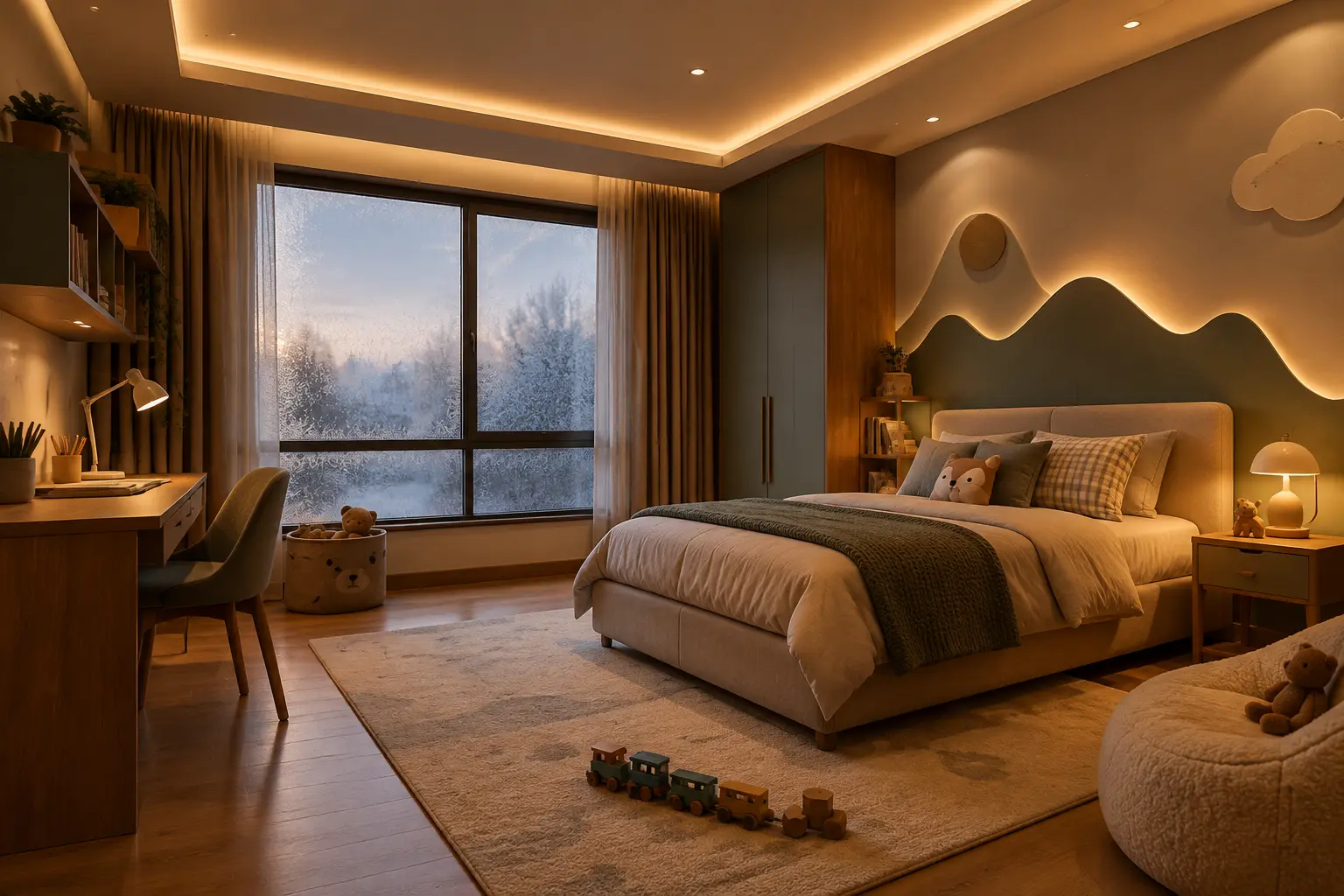
The best lighting for a kids' room is layered and adaptable — it supports the three things children do in their room: play, study, and sleep. This means bright, even, glare-free ambient light for play and daytime; focused, eye-friendly task lighting at the study desk; and soft, warm, dimmable light plus a gentle night light for winding down and sleeping. Safety comes first — enclosed fixtures, no exposed bulbs at low level, and secure fittings. High-quality, flicker-free light protects young eyes, and warm tones in the evening support better sleep. As children grow, their lighting needs change, so a flexible, dimmable scheme that adapts over the years is ideal. This guide covers how to light a kids' room properly.
A child's room is a bedroom, a playground, and a study — all in one. Lighting it well means supporting each of these safely and comfortably. Here's how.
Who Is This Guide For?
Parents designing, decorating, or upgrading a child's room in a home or apartment in Noida, Greater Noida, Gurgaon, or Delhi NCR. Interior designers working on children's spaces. And anyone who wants a kids' room that's safe, functional, and comfortable to grow up in.
Why a Kids' Room Needs Special Lighting
An adult bedroom is mostly about rest and ambience. A child's room does far more — it's where they play energetically, do homework, read, and sleep, often all in the same day. Each of these needs different lighting.
On top of that, children have specific needs adults don't: their developing eyes benefit from good-quality, flicker-free light; safety matters more with active kids around; they often need reassurance in the dark; and their needs change quickly as they grow. Good kids' room lighting accounts for all of this — which is why it deserves thought rather than a single ceiling bulb.
The Three Jobs: Play, Study, Sleep
The foundation of kids' room lighting is layering it for three modes:
Play & daytime — bright, even ambient light. For active play and general use, the room needs bright, even, glare-free illumination so children can see clearly and safely. This is the base layer — comfortable, well-distributed light with no harsh shadows or dark corners.
Study — focused task lighting. At the desk, children need good task lighting — a quality desk lamp or focused light that illuminates their work without glare or shadow. Proper study lighting reduces eye strain and supports concentration, and matters more as schoolwork increases.
Sleep — soft, warm, dimmable light + a night light. For winding down and sleeping, harsh bright light is wrong. Soft, warm, dimmable light helps children relax, and a gentle night light provides reassurance and safe movement in the dark without disrupting sleep.
A layered scheme that shifts between these three modes — ideally with dimming — is the ideal for a kids' room.
Safety First
With children, safety is the top priority in lighting choices:
Enclosed, sturdy fixtures. Choose fixtures with enclosed bulbs and no exposed glass or hot surfaces within reach, especially at low levels where children play.
Secure fittings. Ensure lights, lamps, and fixtures are securely mounted and can't be pulled down or knocked over easily.
Cool-running LEDs. LED lighting runs cool (unlike hot halogen or incandescent), reducing burn risk — a good reason to use LED throughout a kids' room.
Cordless or managed cords. Table and desk lamps with trailing cords are a hazard; manage cords safely or choose fixtures that avoid them at child level.
Cover low sockets and outlets. Not lighting itself, but part of a safely lit, child-proofed room.
Safe lighting isn't a compromise on style — it simply means choosing the right, well-fitted fixtures.
Protecting Young Eyes
Children's eyes are still developing, so light quality matters:
Flicker-free lighting. Cheap, low-quality LEDs can flicker imperceptibly, causing eye strain and headaches. Choose quality, flicker-free lighting for a child's room, especially at the study area.
Good brightness — not too dim, not harsh. Study and play areas need adequate brightness so children don't strain to see, but without harsh glare. Well-distributed, comfortable light is the goal.
Good colour rendering. Light that shows colours naturally helps in a space where children read, draw, and play with colourful things.
Right colour temperature by time. Neutral, brighter light (around 4000K) suits study and daytime alertness; warmer light (2700–3000K) suits evening and sleep. Tunable or dimmable lighting that shifts through the day is ideal.
Fun, Without Overdoing It
A kids' room can have playful, characterful lighting — it's part of what makes it special. Fun fixtures, gentle decorative lighting (like soft star projectors or themed lamps), and colour accents can add magic and personality.
The balance to strike: let the fun lighting be a layer, not the main functional light. A themed decorative lamp is lovely, but the room still needs proper ambient, study, and sleep lighting underneath it. Playful accents on a solid functional base — that's the sweet spot.
Designing for Growth
Children's needs change fast — a toddler's room, a schoolchild's room, and a teenager's room have very different lighting requirements. The smartest approach is flexible, adaptable lighting that can grow with the child:
- Dimmable lighting adjusts as needs change.
- A good ambient + task + sleep base works at any age.
- Avoid over-committing to very young-child themes in the permanent lighting (keep those to easily-changed decorative pieces).
- Smart or dimmable controls let the same room serve a 5-year-old and a 15-year-old.
Designing the base lighting to last, while keeping the playful elements easy to change, saves redoing the room every few years.
Common Kids' Room Lighting Mistakes
One central light only. Can't serve play, study, and sleep. Layer it.
Too dim for study. Strains developing eyes. Provide proper task light.
Too harsh for sleep. Bright cool light before bed disrupts winding down. Use warm, dimmable light.
No night light. Many children need gentle reassurance in the dark.
Cheap, flickering LEDs. Cause eye strain. Choose quality, flicker-free light.
Unsafe fixtures. Exposed bulbs or unstable lamps at child level are hazards. Choose enclosed, secure, cool-running fixtures.
Expert Recommendation from Brightmatic
For the children's rooms we help design across Delhi NCR, our guidance is simple: build a safe, flexible, layered base — bright for play, focused for study, soft for sleep — and let the fun live in the details.
The insight worth passing on: parents often focus on the fun, themed lighting — the character lamp, the star projector — and treat the functional lighting as an afterthought. But a child's room lighting has real jobs to do: it protects developing eyes during hours of homework, keeps an active space safe, and helps a child wind down and sleep well. Get that functional base right — quality flicker-free light, proper study lighting, warm dimmable light for bedtime, and a gentle night light — and then add the playful touches on top. The magic lamp is wonderful, but it's the considered, layered base underneath that actually serves the child, day and night, for years as they grow.
That's the thinking behind our architectural lighting approach for every room — lighting designed around how the space is really used, Crafting Brighter Lives.
Lighting Your Child's Room?
A kids' room is a play space, a study, and a bedroom in one — and good lighting supports all three, safely and comfortably. Get the layered, flexible base right, protect young eyes with quality light, and add the fun on top.
Planning a child's room? Get a free consultation.
Designing a home in Noida or Delhi NCR? Contact Brightmatic for a personalised lighting consultation.
FAQ's
What is the best lighting for a kids' room?
The best lighting is layered for three modes: bright, even, glare-free ambient light for play and daytime; focused task lighting at the study desk; and soft, warm, dimmable light plus a night light for sleep. Use safe, enclosed, cool-running LED fixtures and quality flicker-free light to protect young eyes. Dimmable, adaptable lighting that grows with the child is ideal.What colour temperature is best for a children's room?
Use neutral, brighter light (around 4000K) for study and daytime alertness, and warmer light (2700–3000K) for evening and sleep. Tunable or dimmable lighting that shifts through the day is ideal — supporting focus during homework and helping children wind down at bedtime. Avoid harsh cool light in the evening, as it can disrupt sleep.Should a kids' room have a night light?
Yes, for most children — a gentle night light provides reassurance in the dark and allows safe movement at night without fully waking them. Choose a soft, warm, low-level night light that doesn't disrupt sleep. It's a small addition that makes a real difference to a child's comfort and a parent's peace of mind.How do I make kids' room lighting safe?
Choose enclosed fixtures with no exposed bulbs or hot surfaces within reach, ensure lights and lamps are securely mounted and can't be pulled down, and use cool-running LEDs to reduce burn risk. Manage or avoid trailing cords at child level, and cover low sockets. Safe lighting means selecting the right, well-fitted fixtures rather than compromising on style.Is flicker-free lighting important for children?
Yes — children's eyes are still developing, and cheap, low-quality LEDs can flicker imperceptibly, causing eye strain and headaches, especially during study. Choosing quality, flicker-free lighting protects young eyes and supports comfortable reading and homework. It's particularly important at the study desk, where children spend focused time looking at their work.
Comments
No Comments