

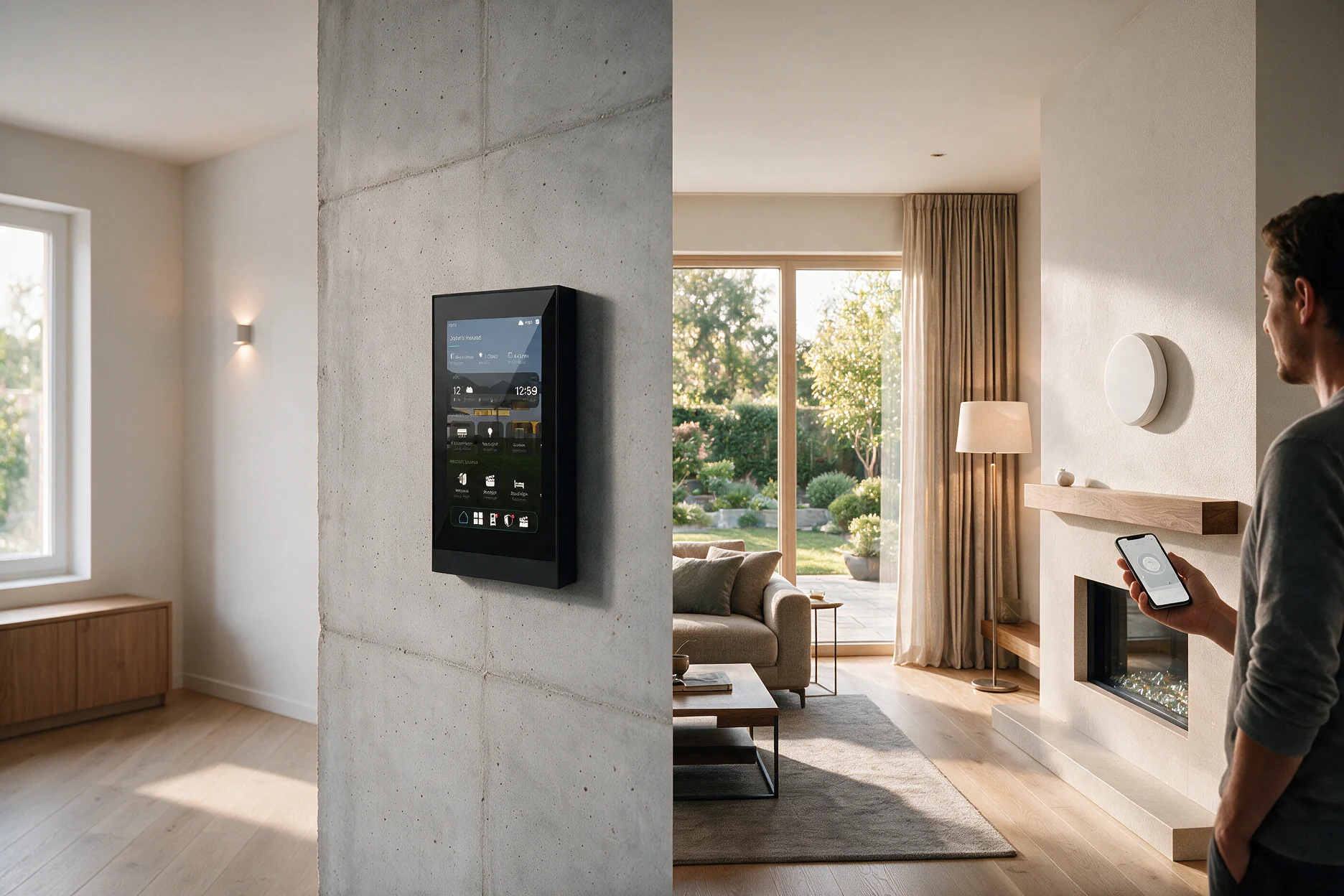
Wired home automation connects devices through physical cables to a central system — it's the most reliable, stable, and powerful approach, ideal for new builds and whole-home automation, but needs to be planned and installed during construction. Wireless home automation connects devices over Wi-Fi, Zigbee, or similar radio protocols — it's flexible, easier to install, and perfect for existing homes and retrofits, though it depends on signal strength and can be less rock-solid than wired. Neither is universally better: wired suits new, large, or premium homes wanting maximum reliability; wireless suits finished homes, apartments, and those wanting flexibility. Many of the best smart homes use both — a wired backbone with wireless where it makes sense. This guide compares them to help you choose.
When planning a smart home, one of the first big decisions is wired or wireless. It shapes the reliability, cost, and how the system is installed. Here's how they compare.
Who Is This Guide For?
Homeowners planning a smart home in Noida, Greater Noida, Gurgaon, or Delhi NCR — whether building new or upgrading an existing home. Architects and designers specifying automation for a project. And anyone unsure whether to go wired, wireless, or both.
What Is Wired Home Automation?
Wired home automation connects all devices — switches, sensors, controllers — through physical cabling to a central controller or bus. Systems like KNX are the classic example: a wired backbone running through the home, connecting everything reliably.
Because communication travels through dedicated cables, wired systems are exceptionally stable and reliable — no dependence on wireless signals, no interference, no dropouts. They're the professional standard for whole-home and premium automation. The catch: the cabling must be planned and installed during construction or a major renovation, when walls are open.
What Is Wireless Home Automation?
Wireless home automation connects devices over radio protocols — Wi-Fi, Zigbee, Z-Wave, Bluetooth, or Thread — with no control cabling between them. Devices communicate through the air to a hub or directly.
The big advantage is flexibility and ease of installation. Because there's no wiring to run, wireless devices can be added to a finished home with minimal disruption — ideal for retrofits, apartments, and rented homes. You can start small and expand device by device. The trade-off: wireless depends on signal strength and network reliability, and can be marginally less rock-solid than a wired system, though modern wireless has become very dependable.
Wired vs Wireless — Side by Side
| Factor | Wired | Wireless |
|---|---|---|
| Reliability | Highest — stable, no dropouts | Very good, depends on signal |
| Installation | During construction (cabling) | Anytime, minimal disruption |
| Best for | New builds, whole-home, premium | Retrofits, apartments, flexibility |
| Expandability | Planned in advance | Easy, device by device |
| Interference | None | Possible (signal/network) |
| Longevity | Very long, robust | Good; depends on tech/batteries |
| Cost | Higher upfront, built-in | Lower entry, flexible |
The Case for Wired
Maximum reliability. With everything hardwired, a wired system is the most stable and dependable — critical for whole-home automation where you want it to work flawlessly, every time.
No interference or dropouts. No dependence on Wi-Fi or radio signals means no interference and no connection issues.
Powerful and scalable. Wired systems handle large, complex homes with many devices effortlessly, all coordinated through one robust backbone.
Longevity. A well-installed wired system lasts for decades, with no batteries to replace in the core infrastructure.
Clean and integrated. Planned into the home, it's invisible and seamless.
Wired is the choice for a new build, a large or premium home, or anyone wanting the most robust, future-proof automation — provided it's planned early.
The Case for Wireless
Easy to install anywhere. No cabling means wireless can be added to any finished home with minimal disruption — the biggest advantage for existing homes.
Perfect for retrofits and apartments. If you can't (or don't want to) open walls, wireless is the practical route to a smart home.
Flexible and expandable. Start with a few devices and add more over time, easily and affordably.
Lower entry cost. You can begin small without a major upfront investment.
Renter-friendly. Many wireless devices can move with you.
Wireless is the choice for existing homes, apartments, phased upgrades, and anyone wanting flexibility without construction.
The Best Answer: Often Both
Here's what many people don't realise — wired and wireless aren't mutually exclusive. Some of the best smart homes use a hybrid approach: a reliable wired backbone for the core (lighting, key systems) planned into the build, with wireless devices added where flexibility matters or where wiring isn't practical.
This gives you the reliability of wired where it counts, and the flexibility of wireless everywhere else. A good integrator designs the right balance for your home — rather than treating it as an all-or-nothing choice.
How to Choose
Building or renovating? Go wired (or hybrid) — it's the one time you can install cabling cleanly, and you get maximum reliability. Plan it early.
Existing finished home? Wireless is usually the practical choice — a smart home without opening walls. A hybrid may be possible if some wiring is accessible.
Apartment or rented? Wireless — flexible, non-invasive, and often movable.
Want maximum reliability for a large/premium home? Wired backbone, ideally hybrid.
Want to start small and expand? Wireless lets you build up gradually.
The honest guidance: let the home decide. A new build should exploit the chance to go wired; a finished home should embrace the flexibility of wireless. And for many, a thoughtful hybrid is the best of both.
Expert Recommendation from Brightmatic
For the homes we automate across Delhi NCR, our approach to wired versus wireless is pragmatic: wired where reliability matters most and the build allows it, wireless where flexibility matters or walls are closed — and often a considered hybrid of the two.
The insight worth passing on: people sometimes treat this as an ideological choice — "wired is always better" or "wireless is the future." The reality is that the right answer depends entirely on your situation. For a new premium home, going wired (or hybrid) during construction is a clear win — you get rock-solid reliability built in, and you'll never get a cleaner chance to do it. But telling someone in a finished apartment that they must go wired is impractical; modern wireless will serve them beautifully without tearing up their home. The mistake isn't choosing wired or wireless — it's choosing the wrong one for your circumstances, or assuming it's all-or-nothing. Match the approach to the home, and both deliver a genuinely smart result.
That's the thinking behind our home automation approach — the right system for your home, Crafting Brighter Lives.
Planning Your Smart Home?
Wired or wireless isn't about which is "better" — it's about what suits your home and situation. A new build can exploit the reliability of wired; a finished home can embrace the flexibility of wireless; and many homes are best served by a thoughtful blend of both.
Not sure which approach suits your home? Get a free consultation.
Planning a smart home in Noida or Delhi NCR? Contact Brightmatic for a personalised home automation consultation.
FAQ's
What is the difference between wired and wireless home automation?
Wired home automation connects devices through physical cables to a central system, offering maximum reliability and stability but requiring installation during construction. Wireless home automation connects devices over radio protocols like Wi-Fi or Zigbee, offering flexibility and easy installation in finished homes, though it depends on signal strength. Wired suits new builds; wireless suits retrofits and apartments.Which is better, wired or wireless home automation?
Neither is universally better — it depends on your situation. Wired is more reliable and powerful, ideal for new builds, large homes, and premium automation, but needs planning during construction. Wireless is flexible and easy to install in existing homes, apartments, and retrofits. Many of the best smart homes use a hybrid of both, matching the approach to the home.Is wired home automation more reliable than wireless?
Yes, generally — wired systems communicate through dedicated cables, so they're exceptionally stable with no dependence on signals, no interference, and no dropouts. This makes wired the professional standard for whole-home and premium automation. Modern wireless has become very dependable, but wired remains the most robust choice where maximum reliability is the priority.Can I add home automation to an existing home without wiring?
Yes — wireless home automation is designed exactly for this. Devices connect over Wi-Fi, Zigbee, or similar protocols with no control cabling, so they can be added to a finished home with minimal disruption. This makes wireless ideal for existing homes, apartments, and rented properties, letting you create a smart home without opening walls or major renovation.Should I choose wired or wireless for a new home?
For a new home, wired (or a hybrid) is usually the best choice — construction is the one time you can install cabling cleanly, and it gives maximum reliability built into the home. Plan it early, during the design stage, before walls are closed. You can still add wireless devices later where flexibility helps, making a hybrid approach ideal for new builds.
Comments
No Comments