

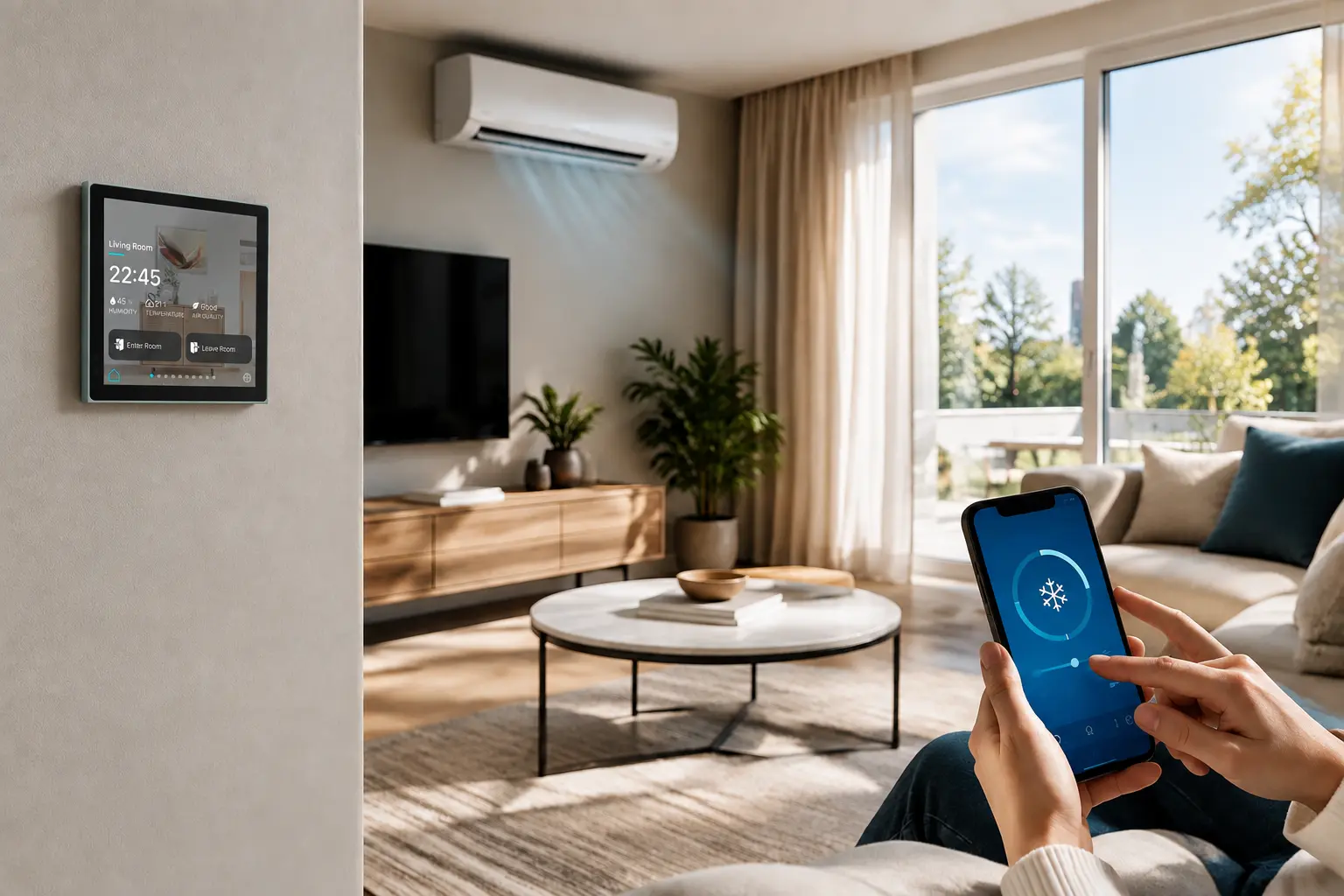
Smart climate control automatically manages a home's temperature and comfort — controlling air conditioners, fans, and heating intelligently rather than manually. Instead of adjusting each AC by remote, a smart climate system lets you control every unit from one app or panel, set schedules, create zones (cooling only occupied rooms), and let the home adjust itself based on time, occupancy, and conditions. In India's climate — hot summers, humidity, and high AC usage — this delivers two big wins: consistent comfort and significant energy savings, since air conditioning is often a home's largest electricity cost. Smart climate control ranges from a single smart thermostat to whole-home integrated systems. This guide explains how it works and why it matters for Indian homes.
In India, climate control isn't a luxury — it's essential, and it's expensive to run. Smart climate control makes it more comfortable and far more efficient. Here's how it works.
Who Is This Guide For?
Homeowners in Noida, Greater Noida, Gurgaon, or Delhi NCR wanting better comfort and lower cooling bills. Anyone frustrated with juggling AC remotes, uneven cooling, or high electricity costs. And those planning a new home or smart home who want climate control done intelligently.
What Is Smart Climate Control?
Smart climate control is the intelligent, automated management of a home's temperature and comfort — its air conditioning, fans, and (where relevant) heating. Rather than operating each device manually with separate remotes, a smart system brings them together, controllable from one app, panel, or voice, and able to act automatically.
At its simplest, this is a smart thermostat managing one system. At its fullest, it's a whole-home system controlling every AC unit, integrated with the rest of the smart home, adjusting itself intelligently throughout the day. Either way, the goal is the same: comfort without effort, and efficiency without compromise.
Why It Matters More in India
India's climate makes smart climate control especially valuable:
Air conditioning is a major cost. In Indian homes, AC is often the single largest contributor to the electricity bill, especially in the long summer. Even modest efficiency gains translate into meaningful savings.
Extended cooling season. With hot weather for much of the year, cooling runs for long periods — so how efficiently it runs matters enormously.
Humidity and comfort. Beyond temperature, comfort in India involves managing humidity and consistent cooling — something intelligent control handles better than manual adjustment.
Multiple units, manual chaos. Homes often have several AC units, each with its own remote, frequently left running in empty rooms. Smart control ends this waste.
This is why smart climate control delivers both comfort and cost benefits particularly well in the Indian context.
How Smart Climate Control Works
A smart climate system typically brings together several capabilities:
Centralised control. Control every AC and fan from one app or wall panel, instead of hunting for remotes — including remotely, so you can cool the home before you arrive.
Scheduling. Set the climate to follow your routine — cooling that starts before you wake or return, and eases back when you're out or asleep. This alone cuts significant waste.
Zoning. Cool only the rooms in use, rather than the whole home. Zoning is one of the biggest energy savers, ensuring you're not paying to cool empty rooms.
Occupancy-based control. Sensors can adjust or switch off cooling in unoccupied rooms automatically — comfort where people are, savings where they aren't.
Integration & scenes. Climate becomes part of the wider smart home — a "goodnight" scene that sets sleeping temperatures, or an "away" mode that eases everything back. Systems like the Core AC gateway bring standard ACs into a KNX smart home for exactly this.
Automatic adjustment. The system responds to time, occupancy, and conditions, maintaining comfort while minimising energy use — without you thinking about it.
The Energy Savings
For most Indian homes, the strongest argument for smart climate control is energy savings — because cooling is such a large, ongoing cost.
The savings come from precision. Manual AC use is wasteful: units left on in empty rooms, cooling running all night at full blast, whole homes cooled when only one room is occupied. Smart climate control eliminates this — cooling only what's needed, when it's needed, at the right level. Scheduling, zoning, and occupancy control together can meaningfully reduce cooling costs over a long Indian summer, often paying back the investment over time.
Comfort improves too: the home is at the right temperature when you need it, without the manual fiddling — a rare case where you save money and gain comfort simultaneously.
From Simple to Whole-Home
Smart climate control scales to your needs:
A smart thermostat / single unit. The entry point — making one AC or system smart, with app control, scheduling, and learning. A great, low-effort upgrade.
Multiple units via smart control. Bringing several ACs under one app and schedule — ideal for homes with multiple units, ending the remote chaos.
Whole-home integrated climate. Full integration with the smart home — zoning, occupancy control, scenes, and coordination with lighting, curtains, and more. Best planned during construction or a smart-home project.
You can start simple and expand, though for a new home, planning integrated climate control from the start gives the cleanest, most capable result.
What to Consider
Compatibility with your ACs. Smart control needs to work with your air conditioners — gateways and controllers bring standard ACs into a smart system, so check compatibility.
How many units and rooms? This determines whether you need a simple smart thermostat or a whole-home system with zoning.
Integration goals. If you want climate as part of a full smart home, plan for an integrated platform rather than standalone gadgets.
Energy priorities. If cutting bills is the goal, prioritise zoning, scheduling, and occupancy control — the biggest savers.
Plan early for new homes. Whole-home climate control is cleanest when designed in during construction, alongside the wider home automation.
Expert Recommendation from Brightmatic
For the homes we work on across Delhi NCR, our guidance on smart climate control is shaped by one reality: in India, cooling is both essential and expensive, so the smartest system is the one that keeps you comfortable while quietly cutting waste.
The insight worth passing on: people often think smart climate control is about fancy app control — being able to turn the AC on from your phone. That's convenient, but it's not where the real value is. The value is in what the system does automatically — cooling only occupied rooms, easing back when you're asleep or out, following your routine without being told. A home with three ACs left running in empty rooms all evening is burning money; a smart system simply doesn't let that happen. In India's climate, where cooling dominates the electricity bill, that automatic efficiency is worth far more than remote control. Set it up well, and it pays for itself in comfort you feel and bills you don't.
That's the thinking behind our home automation approach to climate — comfort and efficiency working together, Crafting Brighter Lives.
Planning Smart Climate Control?
In India, cooling is essential — and expensive. Smart climate control gives you consistent comfort and meaningful energy savings, by cooling intelligently rather than manually. Whether a single smart thermostat or a whole-home system, it's one of the smartest upgrades for an Indian home.
Want comfort and lower cooling bills? Get a free consultation.
Planning a home in Noida or Delhi NCR? Contact Brightmatic for a personalised smart climate control consultation.
FAQ's
What is smart climate control?
Smart climate control is the intelligent, automated management of a home's temperature and comfort — its air conditioning, fans, and heating. Instead of adjusting each device manually, a smart system controls them all from one app or panel, sets schedules, creates zones, and adjusts automatically based on time, occupancy, and conditions. It delivers consistent comfort and significant energy savings.How does smart climate control save energy?
It saves energy through precision — cooling only occupied rooms (zoning), following schedules so cooling isn't wasted when you're out or asleep, and using occupancy sensors to switch off cooling in empty rooms. Since air conditioning is often the largest electricity cost in Indian homes, eliminating this waste can meaningfully reduce cooling bills over a long summer, often paying back the investment.Can I control my existing ACs with a smart system?
Often yes — smart AC controllers and gateways bring standard air conditioners into a smart climate system, letting you control them by app, schedule, and integration without replacing the units. Compatibility depends on your ACs, so it's worth checking, but many existing air conditioners can be made smart this way, avoiding the cost of new units.Is smart climate control worth it in India?
For most Indian homes, yes — because cooling is both essential and expensive. Smart climate control improves comfort (the right temperature automatically) while cutting the electricity waste of manual AC use, which is significant over India's long cooling season. The combination of better comfort and lower bills, especially in homes with multiple ACs, makes it a worthwhile investment.What is the difference between a smart thermostat and smart climate control?
A smart thermostat is a single device that makes one AC or system smart, with app control and scheduling. Smart climate control is the broader concept — it can range from one smart thermostat to a whole-home system controlling every AC, with zoning, occupancy control, and integration with the wider smart home. The thermostat is one part; climate control is the whole approach.
Comments
No Comments