

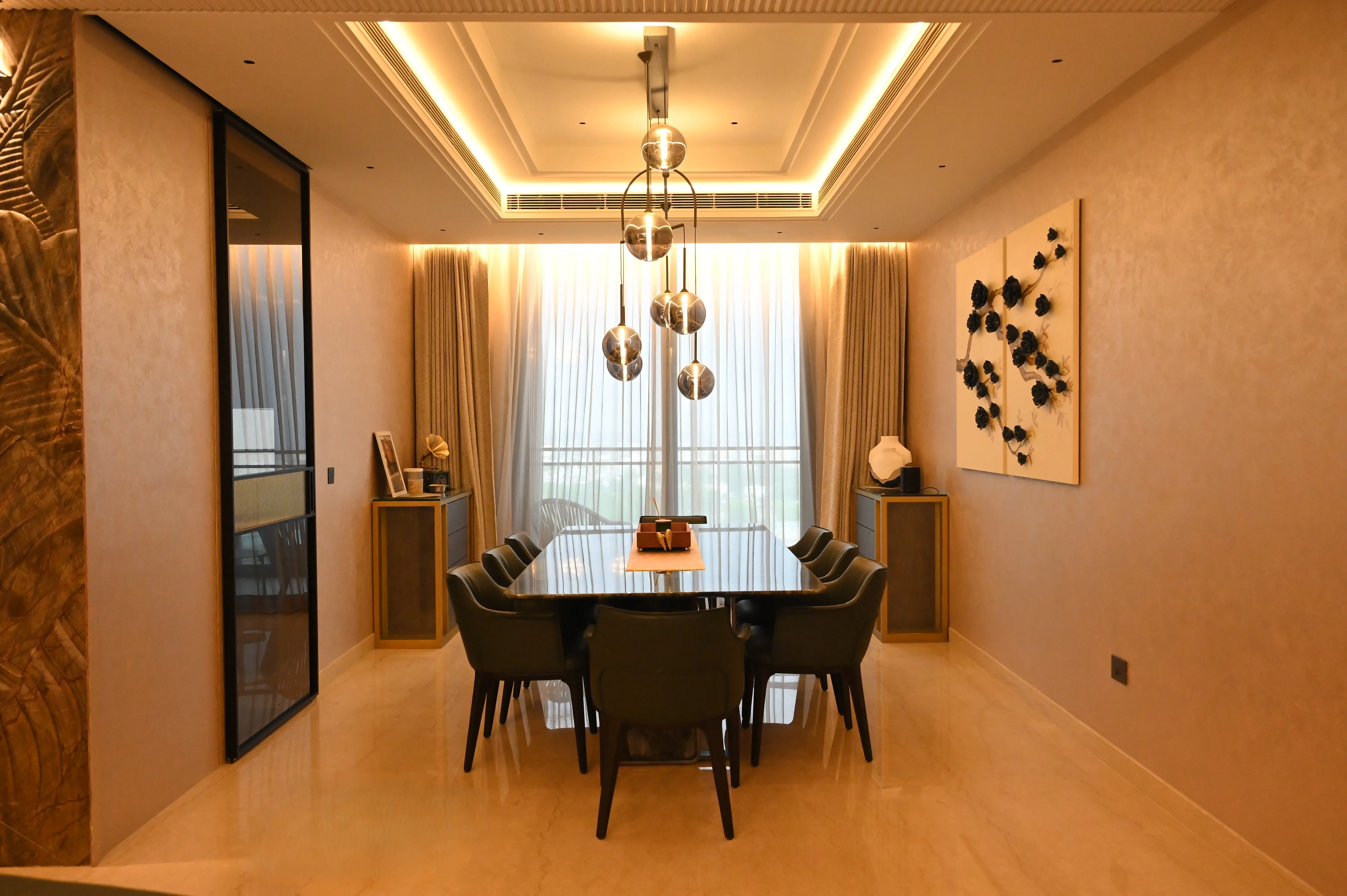
Statement lighting is a bold, eye-catching fixture chosen to be the focal point of a room — a show-stopping chandelier, an oversized pendant, a sculptural cluster, or a dramatic feature light that draws the eye and defines the space. Unlike functional lighting that works quietly in the background, a statement piece is meant to be noticed, adding personality, drama, and a sense of luxury. The key to using it well is restraint and placement: one strong statement per space, positioned where it has room to shine — over a dining table, in a double-height foyer, above a stairwell, or in a living room. Get the scale right, give it space, and a single statement fixture can transform an entire room. This guide shares ideas and how to choose one.
In a modern home, one bold light can do what furniture and art cannot — instantly define a room's character. Here's how to use statement lighting to striking effect.
Who Is This Guide For?
Homeowners designing or upgrading a modern home, villa, or apartment in Noida, Greater Noida, Gurgaon, or Delhi NCR who want a striking focal point. Interior designers and architects specifying feature lighting. And anyone wanting to add drama, personality, and a sense of luxury to a space through one bold fixture.
What Makes Lighting a "Statement"?
Most lighting is designed to disappear — to light a space without drawing attention to itself. Statement lighting does the opposite. It's chosen to be seen, to become the visual centrepiece of a room and set its tone.
A statement fixture is typically bold in scale (larger than you'd expect), striking in design (sculptural, dramatic, or distinctive), and placed as a focal point where it commands attention. It's as much a design object as a light source — the piece guests notice first and remember. In a modern home, it's one of the most powerful ways to inject personality and luxury.
Where to Use Statement Lighting
The impact of a statement piece depends heavily on where it goes. The best spots are those where a bold fixture has room to shine:
Over the dining table. The classic statement location — a dramatic chandelier, linear suspension, or pendant cluster above the dining table anchors the room and creates an intimate, elegant focal point.
In the foyer or entrance. The first thing guests see. A striking fixture here sets the tone for the whole home, especially in double-height entrances where a cascading piece has vertical drama.
Above a stairwell. Double-height stairwells are made for statement lighting — a long, cascading fixture that flows down the void is breathtaking.
In the living room. A bold central fixture or sculptural piece gives the main living space a defined character and centre.
Over a kitchen island. A row of striking pendants or a bold linear fixture turns a functional island into a design feature.
In the bedroom. A statement pendant or chandelier adds unexpected luxury and softness to a bedroom.
Choose the room where you want the eye to go — and let the statement piece lead it there.
Types of Statement Fixtures
Statement lighting comes in many forms for a modern home:
Sculptural chandeliers. Contemporary chandeliers — geometric, abstract, or organic — that read as art. A modern take on a timeless focal point. (For choosing between fixture types, see our guide on chandeliers vs pendant lights.)
Oversized pendants. A single large pendant, bold in scale, making a strong, minimal statement.
Pendant clusters. Multiple pendants grouped at varying heights for a dynamic, contemporary focal point — especially over dining tables and stairwells.
Linear suspensions. Long, sleek fixtures ideal over dining tables and islands, combining statement impact with even light.
Sculptural & artistic fixtures. Pieces designed as art objects — striking forms and materials that stand out whether lit or not.
Cascading & tiered fixtures. Dramatic multi-level pieces for double-height spaces, flowing down through the void.
The Golden Rules of Statement Lighting
One statement per space. The most important rule. A statement piece works because it's the focal point. Two competing bold fixtures in one room cancel each other out and create visual chaos. Let one piece lead.
Get the scale right. A statement fixture must be big enough to command the space — too small and it looks lost and apologetic. Bold means bold. Scale it to the room and the surface it's above.
Give it breathing room. A statement piece needs space around it to be appreciated. Don't crowd it with other bold elements; let calm surroundings frame it.
Mind the height. Position it correctly — high enough not to obstruct, low enough to have presence. Over a dining table, the bottom typically sits about 75–90 cm above the surface.
Let the rest recede. Keep the room's other lighting understated so the statement piece stands out. The supporting lighting should be quiet layers, not competitors.
Statement Lighting as Part of a Layered Scheme
A common mistake is thinking a statement fixture is all the lighting a room needs. It isn't. A dramatic chandelier looks stunning, but it rarely lights a room well on its own — it's the feature, not the whole scheme.
The best approach is to make the statement piece the star within a layered lighting design — with ambient, task, and accent light doing the functional work quietly around it. The statement piece provides the drama and focal point; the layers provide the actual usable light. Together, you get a room that's both beautiful and functional — and the statement piece, freed from having to light everything, can be chosen purely for impact.
Common Mistakes to Avoid
Too small. An under-scaled statement piece looks lost. Go bolder than feels safe.
Too many. Multiple statement pieces compete and create clutter. One per space.
Wrong placement. A bold fixture in a cramped or hidden spot wastes its impact. Give it a stage.
Making it do all the work. A statement piece isn't a full lighting scheme. Layer around it.
Ignoring the room's style. The statement should feel intentional within the room's design, not random. Bold, but coherent.
Expert Recommendation from Brightmatic
For the modern homes we light across Delhi NCR, our guidance on statement lighting is simple: choose one bold piece per space, give it the room and the scale to shine, and let quiet, layered light do the functional work around it.
The insight worth passing on: people often hesitate with statement lighting, choosing something a size too small or too safe — and the result underwhelms, looking lost rather than luxurious. Statement lighting rewards confidence. The pieces that transform a room are the ones bold enough to truly command it. But confidence needs discipline too: one statement per space, with everything around it kept calm so the piece can breathe. A single, well-chosen, well-placed, generously-scaled fixture does more for a room than any amount of cautious, scattered lighting. Pick the moment you want to create, choose a piece worthy of it, and give it the stage.
That's the thinking behind our architectural lighting approach — feature lighting designed for impact within a considered whole, Crafting Brighter Lives.
Planning a Statement Piece?
The right statement light can transform a room in a way nothing else can — one bold, well-placed fixture that becomes the space's signature. The secret is confidence and restraint: one piece, boldly scaled, given room to shine, with quiet layered light around it.
Want a show-stopping focal point for your home? Get a free consultation.
Designing a modern home in Noida or Delhi NCR? Contact Brightmatic for a personalised lighting consultation.
FAQ's
What is statement lighting?
Statement lighting is a bold, eye-catching fixture chosen to be the focal point of a room — a dramatic chandelier, oversized pendant, sculptural cluster, or feature light meant to be noticed. Unlike functional lighting that works quietly in the background, a statement piece adds personality, drama, and luxury, becoming the visual centrepiece that defines a space's character.Where should statement lighting be used in a home?
The best places are where a bold fixture has room to shine — over the dining table, in the foyer or entrance (especially double-height), above a stairwell, in the living room, over a kitchen island, or in the bedroom. Choose the room where you want the eye to go, and place the statement piece there as the focal point.How do I choose the right size for a statement light?
Scale it boldly — a statement fixture must be large enough to command the space, as an under-scaled piece looks lost. Consider the room size and the surface it hangs above (like a dining table). Over a dining table, the fixture's width is often around half to two-thirds the table width, with the bottom about 75–90 cm above the surface.Can I have more than one statement light in a room?
Generally no — the golden rule is one statement per space. A statement piece works because it's the single focal point; two competing bold fixtures cancel each other out and create visual clutter. Let one piece lead, and keep the room's other lighting understated so the statement fixture stands out as intended.Does statement lighting provide enough light for a room?
Usually not on its own — a statement fixture is the feature, not the full lighting scheme. A dramatic chandelier looks stunning but rarely lights a room well by itself. The best approach makes the statement piece the star within a layered design, with ambient, task, and accent lighting doing the functional work quietly around it.
Comments
No Comments