
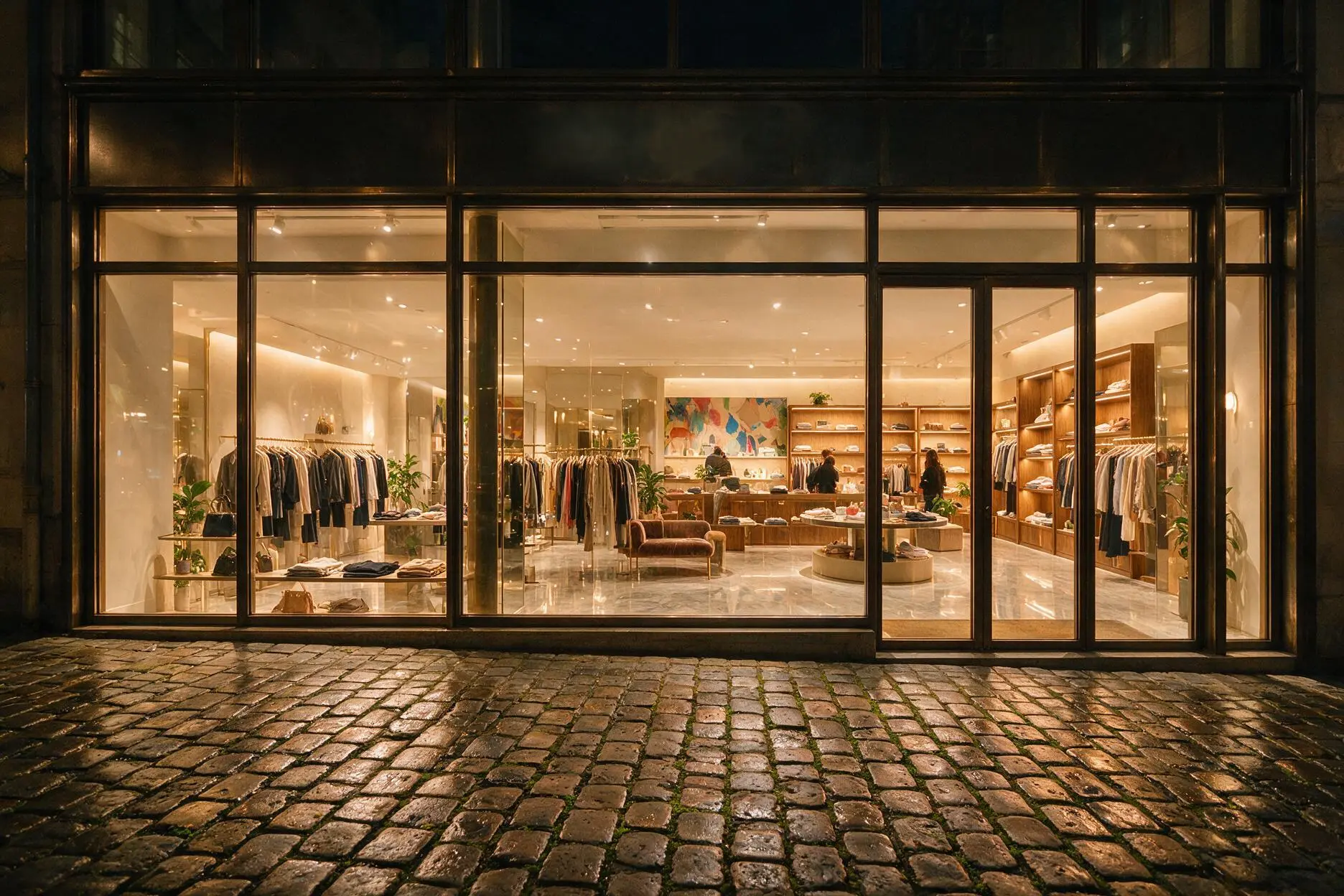
Retail and showroom lighting design has one job above all: to sell. Good retail lighting makes products look their best, draws customers in, guides them through the space, and creates a mood that encourages them to stay and buy. It layers general ambient light with bright, focused accent lighting on products and displays, uses high-CRI light so colours look accurate, and directs attention to what matters. Done well, lighting can lift sales measurably — it's one of the most powerful, and most underrated, tools a store has.
In a shop or showroom, lighting isn't decoration or just visibility — it's a sales tool. The way products are lit directly affects whether customers notice them, how appealing they look, and how long people stay. This guide covers how to light retail spaces to look great and sell more.
Who Is This Guide For?
Retailers, showroom owners, and brands designing or upgrading a store, showroom, or display space in Noida, Greater Noida, Gurgaon, or Delhi NCR. Architects and retail designers specifying lighting for commercial retail projects. And anyone whose shop or showroom feels flat, dim, or fails to make products pop.
Why Retail Lighting Is Different
Most lighting aims for comfort or even illumination. Retail lighting aims for attention and desire. Its purpose is commercial: to make products irresistible and guide customers to buy.
This changes the whole approach. Where an office wants uniform, glare-free light, a store wants contrast — bright, focused light on products against a more restrained background, so the merchandise becomes the hero. Where a home wants relaxation, a showroom wants to draw the eye exactly where the retailer chooses. Retail lighting is strategic, not just functional.
The Layers of Retail Lighting
Like all good lighting, retail uses layers — but with a strong bias toward accent.
1. Ambient (General) Lighting
The base level that lets customers move and see comfortably. In retail, ambient lighting is deliberately kept moderate — not too bright — so that accent lighting on products can stand out against it. Too much flat ambient light and nothing draws the eye.
2. Accent (Feature) Lighting
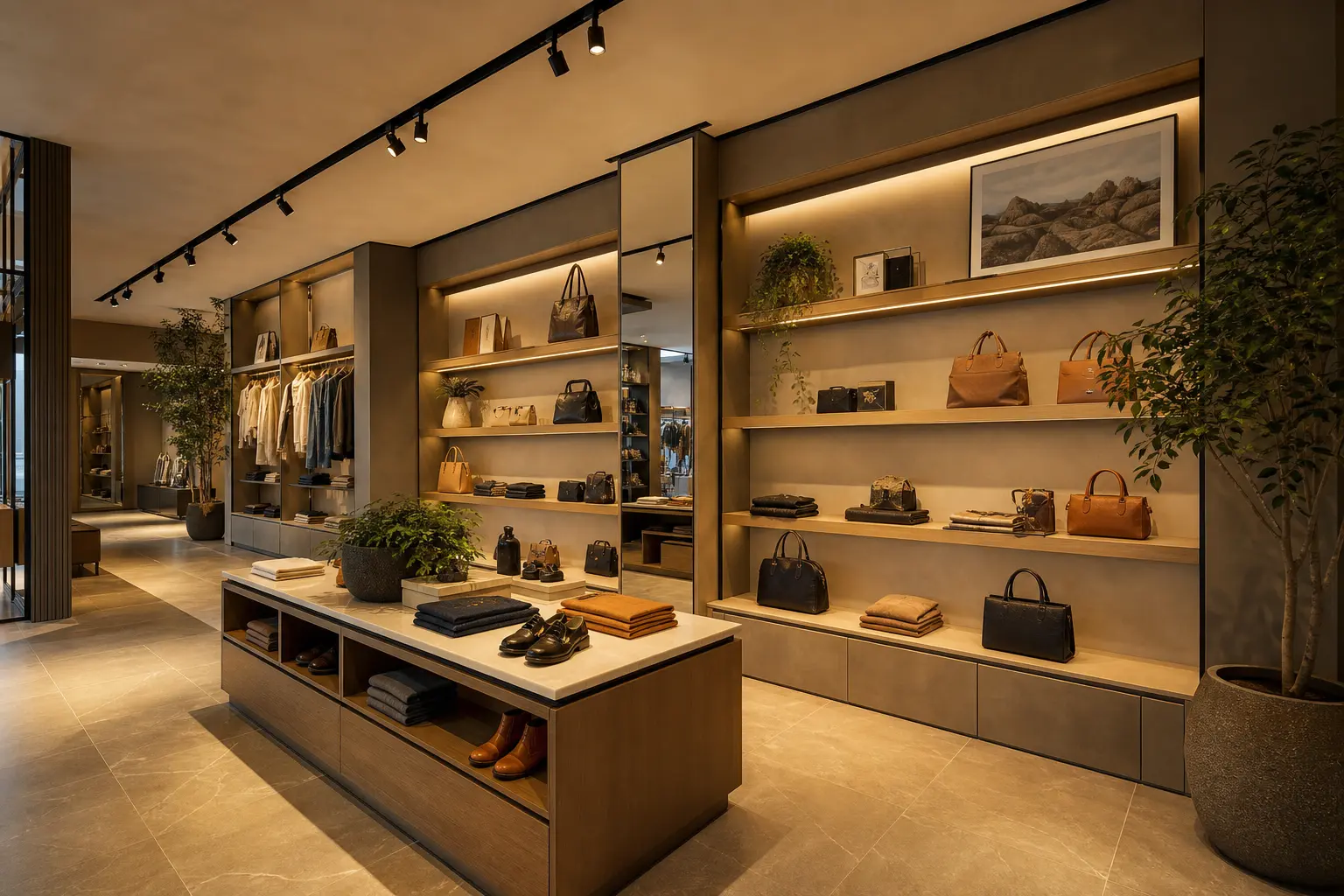
This is the heart of retail lighting. Focused spotlights and track lighting aimed at products, displays, and key merchandise create the contrast that makes items pop. Accent lighting is what turns a shelf of products into a compelling display. The brighter, focused light on a product versus its surroundings is what says "look here."
3. Task Lighting
Task lighting — focused light where customers and staff need it — the checkout, fitting rooms, and service counters. Fitting rooms especially need flattering, accurate light (poor fitting-room lighting loses sales).
4. Decorative Lighting
Statement fixtures — pendants, chandeliers — that reinforce the brand's identity and add to the atmosphere, especially in premium and fashion retail.
The retail balance leans heavily on accent — bright, directed light on merchandise is what differentiates a store that sells from one that just displays.
Colour Accuracy: Why CRI Is Critical in Retail
In retail, how true colours look can make or break a sale. A customer needs to see the real colour of a garment, the true finish of a product, the actual shade of paint or tile.
This is measured by CRI (Colour Rendering Index), and in retail, high CRI (90+) is essential. Low-CRI lighting makes products look dull, grey, or the wrong colour — and a customer who buys a garment that looks different in daylight returns it, or worse, doesn't trust the store again.
For fashion, cosmetics, jewellery, paint, tiles, and any colour-critical product, high-CRI lighting isn't optional — it directly affects sales and returns. This is one of the most common retail lighting failures we see.
Colour Temperature by Retail Type
Different stores need different moods, set largely by colour temperature.
| Retail Type | Recommended | Why |
|---|---|---|
| Fashion / apparel | 3000K–3500K | Warm, flattering to skin and fabric |
| Jewellery | 3000K + sparkle spots | Warm richness, crisp accent sparkle |
| Cosmetics | High-CRI ~3500K | Accurate skin tones |
| Electronics / tech | 4000K | Clean, modern, precise |
| Supermarket / grocery | 4000K, warm on fresh food | Fresh, clean; warm light flatters produce |
| Furniture / home | 3000K | Warm, homely, aspirational |
| Luxury / premium | 3000K, high contrast | Intimate, exclusive feel |
The pattern: warmer light for aspirational, comfort-driven retail (fashion, home, luxury); cooler for precision-driven (electronics). Food retail often mixes — cool general light with warm accents that make fresh produce look appealing.
Lighting to Guide and Sell
Beyond making products look good, retail lighting directs behaviour.
Draw customers in. Bright, inviting lighting at the entrance and window displays pulls people in from outside. The window is the store's first pitch — it must be well lit.
Guide the journey. Brighter "feature" zones draw customers deeper into the store, leading them past more merchandise. Lighting creates a path.
Highlight hero products. The items a retailer most wants to sell get the brightest, most focused accent light — attention follows light.
Create dwell time. Comfortable, well-designed lighting encourages customers to linger, and longer dwell time means more sales.
Reinforce the brand. A budget store and a luxury boutique light very differently — bright and even versus dramatic and contrasted. Lighting communicates positioning before a word is read.
The Automation & Efficiency Angle
Retail lighting runs long hours, so efficiency matters. LED lighting, occupancy sensors in stockrooms, daylight harvesting near windows, and scheduling all cut running costs — the same principles as commercial lighting automation. Automation also allows scene changes — brighter for daytime, a different mood for evening or events — from one system.
Common Retail Lighting Mistakes
Flat, even lighting everywhere. Kills the contrast that makes products pop. Retail needs accent, not uniformity.
Low CRI. Products look the wrong colour, leading to returns and lost trust. High CRI is essential.
Too much glare. Glare off glossy products, glass cases, or into customers' eyes is off-putting. Control it.
Neglecting the window and entrance. The store's first impression. A dark entrance loses customers before they enter.
Wrong colour temperature for the products. Cool light on fashion, warm light on electronics — mismatches make products look wrong.
Poor fitting-room lighting. Unflattering fitting-room light directly loses apparel sales. It must be flattering and accurate.
Ignoring running cost. Retail lighting runs all day. Inefficient lighting is a constant drain. Use LED and controls.
Expert Recommendation from Brightmatic
For the retail and showroom projects we light across Delhi NCR, our approach is built around one principle: light the products, not just the room. We keep ambient light moderate, put bright, high-CRI accent light on merchandise and displays, get the colour temperature right for the product type, and make sure the window and entrance pull people in.
The insight worth passing on: retailers often ask for a bright, evenly lit store, thinking brighter equals better. But even, flat lighting is exactly what makes merchandise look ordinary. The magic is contrast — products lit noticeably brighter than their surroundings. That contrast is what makes a customer's eye land on an item and think "that looks special." A slightly darker store with beautifully lit products sells more than a uniformly bright one where nothing stands out.
Light draws the eye, and in retail, where the eye goes, the sale follows. That's the thinking behind our architectural lighting approach for commercial spaces — lighting that's Designed Around Experience, and designed to sell.
Planning Retail or Showroom Lighting?
In retail, lighting is a sales tool disguised as a fixture. The stores that sell most aren't the brightest — they're the ones where the products are lit to look irresistible, and the customer's eye is guided exactly where the retailer wants.
Want your products to sell themselves? Get a free consultation.
Planning a store or showroom in Noida or Delhi NCR? Contact Brightmatic for a personalised retail lighting consultation.
Frequently Asked Questions
Why is lighting important in retail?
Retail lighting directly affects sales. It makes products look appealing, draws customers in, guides them through the store, highlights key merchandise, and creates a mood that encourages buying. Good retail lighting can measurably lift sales, making it one of a store's most powerful tools, while poor lighting makes products look ordinary and loses customers.What type of lighting is best for retail stores?
Retail stores use layered lighting with a strong bias toward accent lighting — focused spotlights and track lighting on products against moderate ambient light, creating contrast that makes merchandise stand out. High-CRI light for accurate colours and the right colour temperature for the product type are essential. The accent layer is what makes products pop.What is the best colour temperature for a retail store?
It depends on the products. Fashion and home retail suit warm light (3000K–3500K) that flatters; electronics suit cooler 4000K for a clean, precise feel; cosmetics and colour-critical products need high-CRI light around 3500K. The colour temperature should match the mood and product type of the store.Why does CRI matter in retail lighting?
CRI (Colour Rendering Index) measures how accurately light shows colours, and in retail it's critical — customers need to see the true colour of clothes, cosmetics, paint, and products. Low CRI makes items look dull or the wrong colour, causing returns and lost trust. High CRI (90+) is essential for colour-critical retail.How does lighting increase retail sales?
Lighting increases sales by making products more appealing, drawing customers in through bright entrances and windows, guiding them deeper into the store with feature lighting, highlighting hero products with accent light, and encouraging longer dwell time. Where light draws the eye, attention and sales follow.
Comments
No Comments