

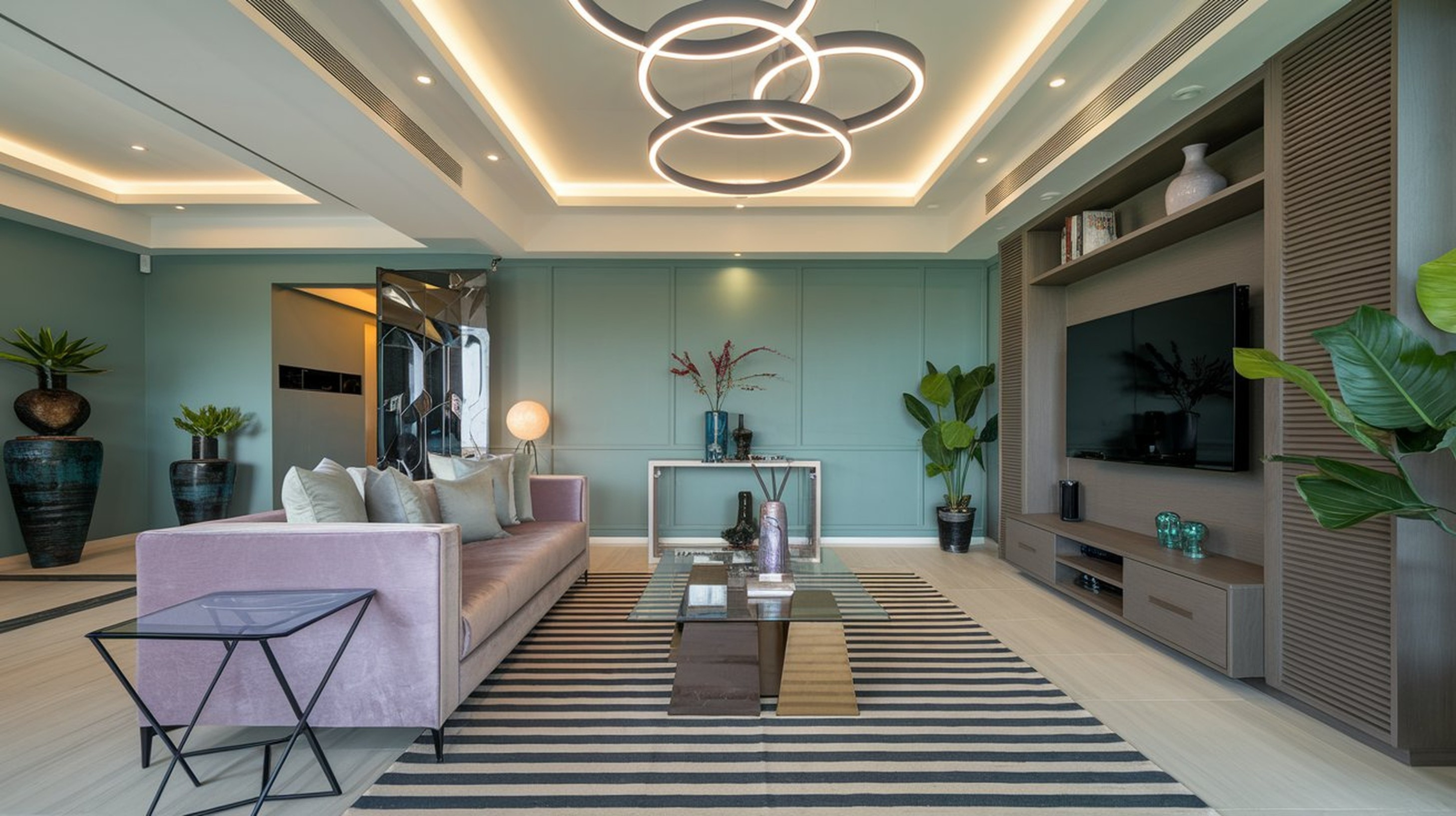
Imagine walking into a high-end art gallery or a luxury jewelry store. The space feels dramatic, the colors pop, and your eyes are immediately drawn to specific paintings or display cases.
This effect isn't accidental—it is the result of Accent Lighting.
While Ambient Lighting provides the overall brightness to help you see, Accent Lighting provides the focus. It is the "jewelry" of lighting design, used to create visual interest, highlight architectural features, and guide the viewer’s eye. Without it, a room feels flat and one-dimensional.
In this guide, we explore exactly what accent lighting is, the best fixtures to achieve it, and the professional techniques used to create drama in modern spaces.
1. Understanding Accent Lighting
Accent lighting is a type of directional lighting that emphasizes a specific object or area. It creates a "visual hierarchy" in the room, telling people what is most important to look at.
Whether it is a painting, a textured stone wall, or a retail product display, the goal is contrast. In professional lighting design, we follow the 3:1 Rule: The accent light should be at least three times brighter than the surrounding ambient light. This contrast grabs attention immediately and adds depth to the space.
2. Benefits of Accent Lighting
Why do designers insist on adding accent layers? It goes beyond just "spotlighting" an object.
- Creates Drama & Atmosphere: By introducing shadows and highlights, accent lighting transforms a boring, flat box into a dynamic environment.
- Highlights Texture: Without directional light, materials like brick, stone, or wood paneling look flat. Accent lighting reveals their depth and craftsmanship.
- Increases Perceived Value: In retail, products lit with high-quality accent lights look more expensive. In homes, it showcases your art and decor investment.
- Guides Movement: It subtly directs people through a space—drawing them down a hallway or towards a specific seating area.
3. Types of Accent Lighting Fixtures
To achieve that precise beam of light, you need specific tools. Here are the most common fixtures used in modern architecture.
Track & Magnetic Lighting Systems
This is the top choice for galleries and retail stores. Magnetic Track Lights allow you to clip in adjustable spotlights anywhere along the track.
- Best For: Flexibility. You can move the lights as your furniture or art changes.
Recessed Adjustable Spotlights
For a cleaner, more residential look, these fixtures are recessed into the ceiling but have a "gimbal" mechanism that allows you to tilt and rotate the light beam.
- Best For: Living rooms and bedrooms where you want the light source to be hidden.
Wall Washers & Grazers
These are linear fixtures placed close to a wall. "Wall Washing" bathes the wall in even light (great for large art), while "Grazing" skims the surface to pop texture.
- Best For: Feature walls, stone facades, and textured wallpaper.
4. Professional Techniques: Beam Angles & Placement
The secret to great accent lighting lies in the technical details—specifically, the Beam Angle.
Standard light bulbs spray light everywhere (60°+). Accent lights use focused lenses to control the spread:
- Narrow Spot (10° - 15°): Like a laser beam. Perfect for highlighting a small sculpture or a vase from a high ceiling.
- Medium Flood (24° - 36°): The standard for artwork. It covers the canvas without spilling too much onto the wall.
- Wide Flood (45° - 60°): Used for washing larger areas or furniture groups.
5. Key Considerations: The Importance of CRI
If you are lighting art or colorful retail products, brightness isn't enough. You need High CRI (Color Rendering Index).
Standard LEDs often have a CRI of 80, which makes reds look dull and blues look grey. For accent lighting, always choose fixtures with a CRI of 90+. This ensures that the colors of your artwork, fabrics, or merchandise look vibrant and true-to-life.
FAQ’s
- What is the main purpose of accent lighting?
Answer: Its purpose is to create a focal point. It draws the eye to specific objects like artwork, sculptures, or architectural lighting features, creating visual hierarchy. - How bright should accent lighting be?
Answer: A general rule is the 3:1 Ratio. The accent light should be at least 3 times brighter than the surrounding ambient light to make the object stand out. - What are the best fixtures for accent lighting?
Answer: The most popular tools are Magnetic Track Spotlights (for flexibility), Adjustable Recessed Downlights (for a clean look), and Wall Washers. - What beam angle should I use for art?
Answer: For average-sized artwork, a 24° to 36° beam angle is ideal. It covers the canvas without spilling too much light onto the surrounding wall. - Why is CRI important for accent lighting?
Answer: High CRI (90+) is critical because it reveals true colors. Low CRI lights make reds look dull and blues look grey, ruining the artwork's appearance. - Can I use accent lighting in a living room?
Answer: Yes. Use it to highlight a fireplace, bookshelf, or textured wall. It adds depth and makes the room feel larger and more expensive than flat light alone.
Comments
No Comments