

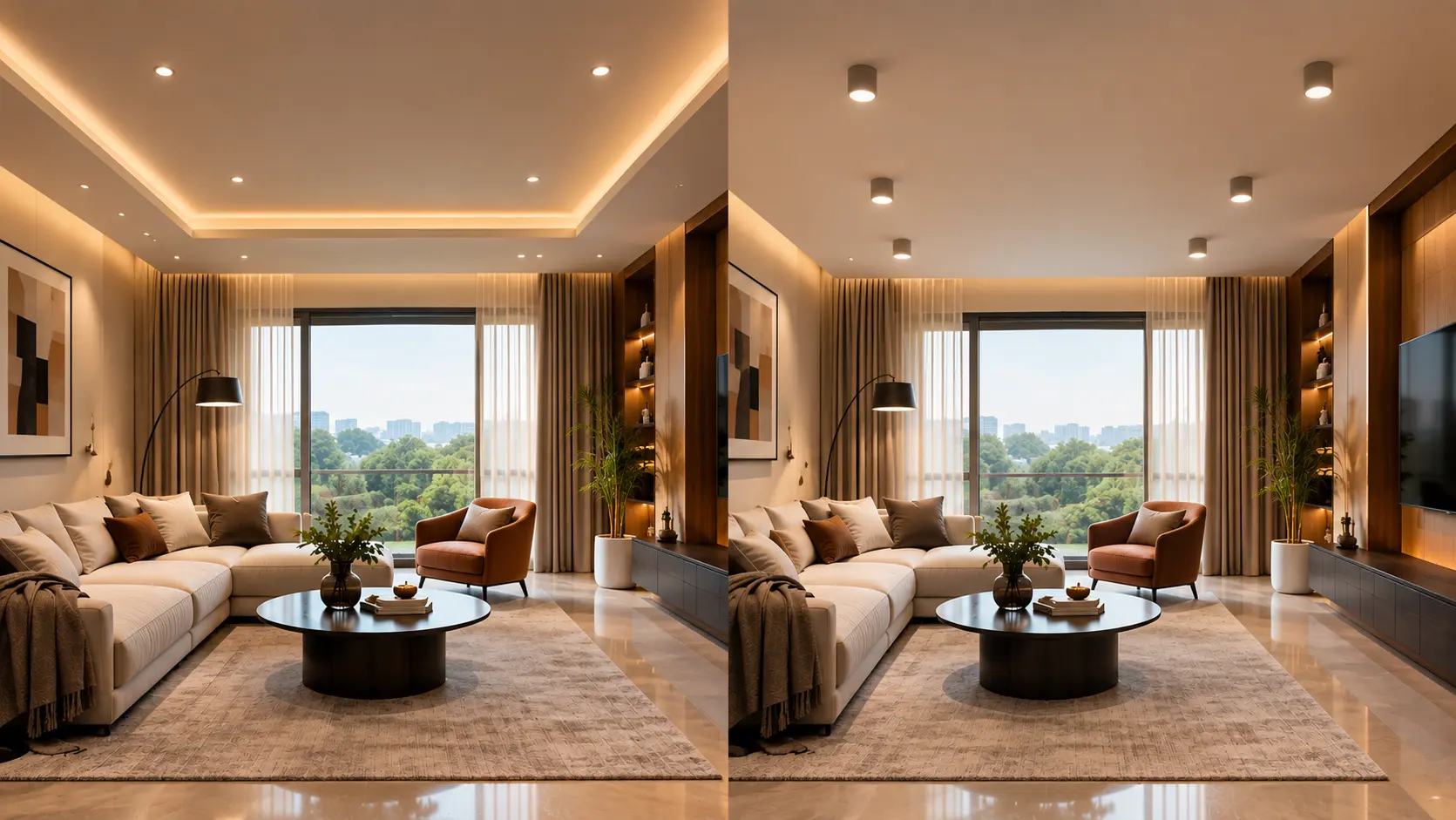
Recessed lighting sits inside the ceiling, flush with the surface, for a clean, minimal look — but it needs depth above the ceiling, usually a false ceiling, to house the fixture. Surface-mounted lighting fits onto the ceiling surface, projecting slightly, and needs no recess or false ceiling — making it ideal for homes without one, or with solid RCC slabs. Recessed lights give a seamless, built-in finish; surface-mounted lights are easier to install, work anywhere, and are simpler to change later. Neither is universally better — recessed suits a designed, false-ceiling home, while surface-mounted suits homes without a false ceiling or where flexibility matters. Often, the best homes use both.
When planning ceiling lighting, one of the first choices is how the lights mount — recessed into the ceiling, or on its surface. This decision affects the look, the installation, and whether you need a false ceiling. This guide explains both.
Who Is This Guide For?
Homeowners building, renovating, or planning lighting for a home, villa, or apartment in Noida, Greater Noida, Gurgaon, or Delhi NCR — especially those deciding whether to have a false ceiling. Architects and interior designers specifying ceiling lighting. And anyone confused about recessed versus surface-mounted lights and which suits their space.
What Is Recessed Lighting?
Recessed lighting is installed inside the ceiling, so the fixture sits flush with the surface, with only the light opening visible. The most common example is the recessed downlight — the neat, round lights you see dotted across modern ceilings.
Because the fixture body sits above the ceiling line, recessed lighting needs depth to house it — which almost always means a false ceiling (a secondary ceiling built below the structural slab) to create that space. This is why recessed lighting and false ceilings usually go together.
The appeal is a clean, seamless, minimal look — the lights become part of the ceiling rather than objects on it. For an understated, architectural finish, recessed lighting is the classic choice, and it's central to most false-ceiling lighting designs.
What Is Surface-Mounted Lighting?
Surface-mounted lighting fits onto the ceiling surface, with the fixture visible and projecting slightly downward. The fixture is fixed directly to the ceiling — no recess needed.
The big advantage: it needs no depth above the ceiling and no false ceiling. This makes surface-mounted lighting ideal for:
- Homes without a false ceiling
- Solid RCC slab ceilings where recessing isn't possible
- Retrofits where you're adding lights to a finished ceiling
- Situations where you want flexibility to change or move lights later
Surface-mounted lights range from simple round panels to decorative fixtures, and modern surface-mounted LED options look sleek — far from the bulky fittings of the past. They're a practical, versatile choice, especially in Indian homes that skip the false ceiling.
Recessed vs Surface-Mounted — Side by Side
| Factor | Recessed | Surface-Mounted |
|---|---|---|
| Position | Inside the ceiling (flush) | On the ceiling (projects out) |
| Look | Seamless, minimal, built-in | Visible fixture on ceiling |
| False ceiling | Usually required | Not needed |
| Works on RCC slab | Difficult | Yes, easily |
| Installation | More involved, planned early | Simpler, flexible |
| Retrofit-friendly | Hard | Easy |
| Changing later | Difficult | Easy |
| Best for | Designed, false-ceiling homes | Homes without false ceiling, retrofits |
The Key Deciding Factor: False Ceiling or Not
The single biggest thing that decides recessed vs surface-mounted is whether you have (or want) a false ceiling.
If you're having a false ceiling: Recessed lighting is the natural, elegant choice — it gives that clean, built-in look, and the false ceiling provides the depth to house the fixtures. This is the route most designed, premium interiors take.
If you're not having a false ceiling (solid RCC slab, budget, or aesthetic preference): Surface-mounted lighting is the practical answer — it fits directly on the slab, no false ceiling needed, and modern options look great. Many Indian homes go this way, and there are plenty of stylish lighting ideas without a false ceiling.
So before choosing the lights, decide the ceiling — the two decisions are linked.
Pros and Cons
Recessed Lighting
Pros: Clean, seamless, minimal look; unobtrusive; premium, architectural finish; ideal for layered, designed lighting.
Cons: Needs a false ceiling (added cost and reduced ceiling height); harder to install and to change later; must be planned early.
Surface-Mounted Lighting
Pros: No false ceiling needed; works on any ceiling including RCC slabs; easy to install and retrofit; simple to change or move; often lower overall cost (no false ceiling).
Cons: Fixtures are visible (less seamless); can look less minimal than recessed; the look depends on choosing good-quality fixtures.
Cost Consideration
These are general guidance points, not quotes — actual cost depends on fixtures, ceiling, and scope.
The cost comparison isn't just about the lights — it's about the ceiling. Recessed lighting itself isn't dramatically more expensive per fixture, but it usually requires a false ceiling, which adds significant cost and labour. Surface-mounted lighting avoids that, so for a home without a false ceiling, it's often the more economical route overall.
If you're already building a false ceiling for design reasons, recessed lighting adds little extra. If you're not, surface-mounted saves you from building one just for the lights. Factor the whole picture, not just the fixture price.
Can You Use Both?
Yes — and the best homes often do. The two aren't mutually exclusive:
- Recessed in the main designed areas with false ceilings (living room, bedrooms) for the clean look.
- Surface-mounted in utility spaces, or areas without false ceilings (some kitchens, balconies, service areas), or where flexibility matters.
Mixing lets you get the seamless look where it counts, and the practicality of surface-mounting where it makes sense. A good lighting designer plans this per space rather than applying one approach everywhere.
Expert Recommendation from Brightmatic
For the homes we design across Delhi NCR, our approach to recessed versus surface-mounted is simple: let the ceiling decide, and think room by room. If a space has a false ceiling, recessed lighting gives the clean, layered, premium finish. If it doesn't, surface-mounted delivers a great result without forcing a false ceiling.
The insight worth passing on: people often assume recessed is "better" because it looks more premium — and then build a false ceiling everywhere just to fit recessed lights, adding cost and losing ceiling height. That's the wrong way round. Decide the ceiling based on the design and the space, then choose the lighting that suits it. A well-chosen surface-mounted scheme in a home without a false ceiling looks intentional and elegant; recessed lights crammed in where they don't belong don't. Match the mounting to the ceiling, not the other way round.
That's the thinking behind our architectural lighting approach — lighting designed around your space, Crafting Brighter Lives.
Planning Your Ceiling Lighting?
Recessed or surface-mounted isn't about which is "better" — it's about what suits your ceiling and your space. Get that match right, and the lighting looks intentional and elegant, whether it's built into a false ceiling or beautifully surface-mounted.
Not sure which suits your home? Get a free consultation.
Planning a home in Noida or Delhi NCR? Contact Brightmatic for a personalised lighting design consultation.
FAQ's
What is the difference between recessed and surface-mounted lighting?
Recessed lighting is installed inside the ceiling, sitting flush for a clean, seamless look, but it needs depth above the ceiling — usually a false ceiling. Surface-mounted lighting fixes onto the ceiling surface, projecting slightly, and needs no recess or false ceiling. Recessed gives a built-in finish; surface-mounted is easier to install and works on any ceiling.Which is better, recessed or surface-mounted lighting?
Neither is universally better. Recessed lighting suits homes with a false ceiling and a desire for a seamless, minimal look. Surface-mounted lighting suits homes without a false ceiling, solid RCC slabs, retrofits, and situations needing flexibility. The right choice depends mainly on whether you have a false ceiling, and many homes use both across different spaces.Does recessed lighting need a false ceiling?
Usually, yes. Recessed lighting needs depth above the ceiling to house the fixture body, which almost always means a false ceiling to create that space. This is why recessed lighting and false ceilings typically go together. If you don't have or want a false ceiling, surface-mounted lighting is the practical alternative.Can I use surface-mounted lights without a false ceiling?
Yes — that's one of their main advantages. Surface-mounted lights fix directly onto the ceiling, including solid RCC slabs, with no false ceiling needed. Modern surface-mounted LED fixtures look sleek and work well in homes that skip the false ceiling for cost or aesthetic reasons, delivering good lighting without extra ceiling work.Is recessed lighting more expensive than surface-mounted?
The lights themselves aren't dramatically different in price, but recessed lighting usually requires a false ceiling, which adds significant cost. So for a home without a false ceiling, surface-mounted is often more economical overall. If you're already building a false ceiling for design reasons, recessed adds little extra. Consider the whole ceiling cost, not just the fixtures.
Comments
No Comments